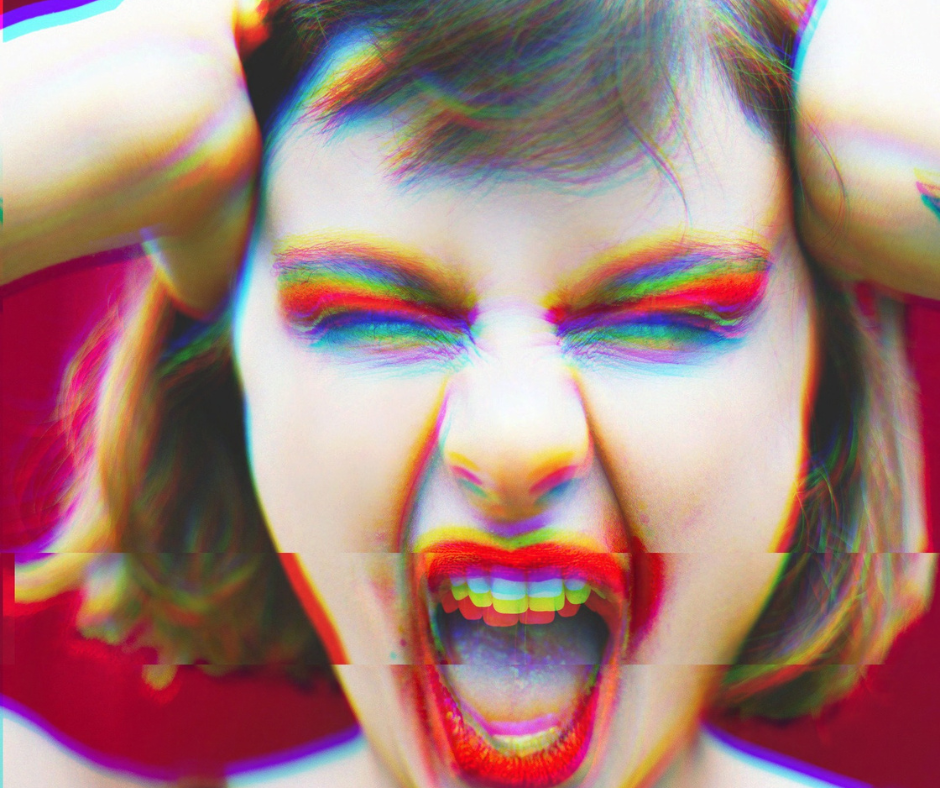
Something strange has happened to a certain class of American women. Among the safest, most educated, and most materially comfortable people in human history, many now move through the world as if they are under constant threat. The language they use is apocalyptic. Disagreement is treated like danger. Ordinary political friction becomes a moral emergency. Protests turn into stages for emotional spectacle, even when the cause has little direct impact on their own lives. This kind of collective hysteria is then rebranded as courage.
The pattern shows up most clearly among white, liberal, college-educated women. Not all of them. But enough that their emotional style increasingly sets the tone of public life.
Which raises an uncomfortable question: how did a group with so much comfort, access, and protection come to see itself as perpetually endangered?
This is often brushed off as passion or political awareness. But what gets sold as moral seriousness usually looks more like emotional instability. Everything feels like a crisis. Every election is “the last one.” Any opposing view gets treated like an attack. Panic becomes the default, and the volume never comes down.
One explanation is simple: meaning has become scarce.
When people are not struggling for survival, they start struggling for significance. Politics becomes a substitute for religion. Activism becomes a substitute for purpose. Protest becomes a substitute for belonging. If nothing is actually on fire, something must be declared on fire.
That doesn’t make people evil. It makes them dramatic.
White liberal women may embody the worst combination of traits: smug pretense of depth, histrionic personality, and moral narcissism.
Our schools and institutions of “higher learning” are packed with them. pic.twitter.com/LsGfKwD7YA
— Dr. Ricardo Duchesne (@dr_duchesne) January 9, 2026
Another piece of the puzzle lies in what modern culture has sold as “empowerment.” Women are told they are strong, yet constantly unsafe. Capable, yet perpetually harmed. Independent, yet always at risk. Resilient, yet endlessly fragile.
Those messages do not build confidence. They build hypervigilance.
Real strength involves tolerating discomfort, arguing without spiraling, and understanding that not every emotional reaction corresponds to an external threat. Instead, many women are taught that emotional intensity is a form of insight, that distress signals moral depth, and that fragility is sophistication.
That worldview trains people to feel endangered even when they are not.
Once discomfort is rebranded as harm, disagreement begins to feel like violence. When emotional safety becomes a right, reality turns into an antagonist. And when fragility is treated as virtue, sturdiness starts to look suspicious.
At that point, hysteria stops looking like a bug. It becomes a feature.
People often ask whether these women are being paid to show up at protests. The idea persists because it feels like the only rational explanation for behavior that often appears so unmoored. But most of the time, they are not being paid.
They are being rewarded.
The most dangerous demographic in Western Civilizations .
Angry white liberal women. pic.twitter.com/OkMyxREce4
— C3 (@C_3C_3) January 9, 2026
Social media favors emotional extremity. Institutions reward ideological signaling. Professional environments increasingly prioritize optics over outcomes. Online communities deliver praise, affirmation, and belonging in exchange for the correct language and the correct outrage.
Those rewards hit the same neurological pathways as money.
Calm does not go viral. Nuance does not earn applause. Quiet competence does not attract followers. But emotional spectacle does. So people escalate—not because they are irrational, but because the system teaches them to.
When Feelings Become Facts
Over time, this creates a strange cultural loop. Emotional display becomes credibility. Distress becomes evidence. Feeling strongly becomes more important than thinking clearly. The more upset someone appears, the more morally serious they seem.
That is how hysteria becomes normalized.
This emotional reasoning is not confined to rallies or viral threads. It shows up in powerful institutions too, sometimes with real consequences. Consider Judge Boasberg’s refusal to let deportations end, a decision that many critics saw as disconnected from statutory clarity and rooted more in ideological posture than legal text. When judges begin reasoning from feeling rather than from law, the rules become elastic. Outcomes start to reflect emotional narratives instead of firm boundaries. That is not jurisprudence. It is the same mindset animating much of the activist culture described earlier, where what feels right is treated as more authoritative than what is real, legal, or structurally sound.
Psychological Slavery
Another factor that rarely gets named is psychological submission. In many of these spaces, women behave as though they are in a permanent state of moral probation. There is a constant need to prove goodness, to show awareness, to apologize for comfort, to demonstrate the correct posture. What gets framed as solidarity often looks more like self-abasement. Support is not enough. Allegiance must be performed. Causes are not simply backed. They are bowed to.
The culture reinforces this. It teaches that guilt is permanent, that neutrality is violence, that disagreement is harm, and that silence is complicity. The result is overcorrection. People perform. They defer. They dramatize their loyalty. What looks like hysteria is often fear. Fear of being labeled, being excluded, and fear of being on the wrong side. In that sense, this begins to resemble a new kind of slavery, not physical but psychological, where people surrender their judgment in exchange for moral safety.
There is also a deeper issue at work: the erosion of adulthood.
Healthy adult societies expect people to tolerate friction. They assume disagreement is normal. They understand that reality does not bend to personal feelings. Maturity involves regulating emotion rather than outsourcing it.
Yet many modern progressive spaces treat adults the way we treat children. Everything must be emotionally safe. Nothing should offend. Authority must nurture. Conflict must be padded. Language must be softened.
That approach does not produce strong citizens. It produces anxious ones.
A culture that teaches its most comfortable members to feel perpetually endangered does not create wisdom. It creates nervous systems on edge.
Why does this show up so strongly among white liberal women?
Not because of biology or moral failure, but because of cultural positioning. This group is heavily represented in education, media, nonprofits, and institutional life. They shape tone. They influence language. Their emotional style becomes ambient.
When a group with cultural power adopts a fragile worldview, that worldview spreads.
And it is spreading.
Ideas that once would have sounded strange now pass as moral common sense: that words are wounds, that discomfort is danger, that offense is oppression, that emotional safety is a right, and that resilience is suspect.
These ideas did not dominate a generation ago. They are new. And they are powerful.
The real problem is not that some women are loud, emotional, or politically intense. The problem is that this behavior is now framed as wisdom.
It isn’t.
It is unsustainable.
A society cannot function when its most comfortable members believe they are constantly under siege. It cannot deliberate when disagreement is treated as trauma. It cannot reason when feelings are treated as facts.
At some point, a culture has to decide whether it values emotional expression more than emotional regulation.
Right now, it seems to have chosen the former.
And that choice has consequences.
Feature Image: Angry woman/pexels/free download/edited in Canva Pro


One thought on “Why So Many Liberal Women Seem Unmoored From Reality”