
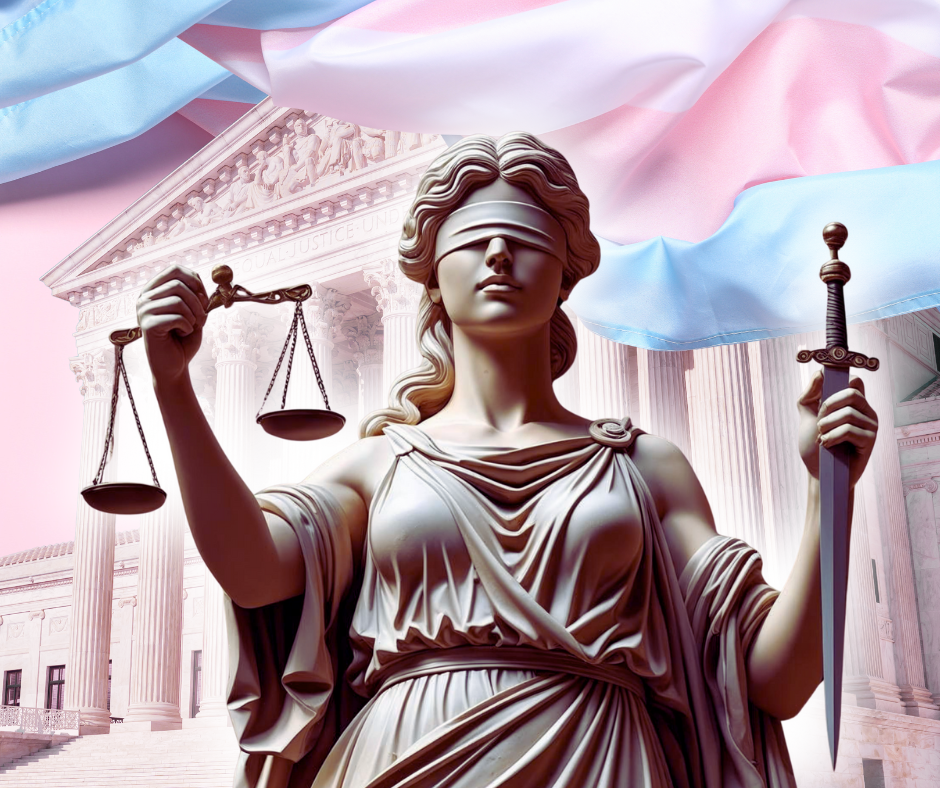
What Does the Word “Sex” Even Mean Anymore?
Most Americans never voted to redefine basic words. Congress did not debate it, and nobody held a national conversation about it. Still, the meaning of the word “sex” changed anyway, and it happened quietly.
Now people argue about bathrooms at work, sports teams at school, and policies that seem to rewrite themselves every year. Parents feel confused, employees feel nervous, and coaches feel like they are walking through a legal minefield.
It feels like everyone missed a meeting.
That is because most of us did.
The laws that govern this country still use the word “sex.” Title IX uses it, and Title VII uses it too. Congress wrote those laws decades ago, and the word has never been replaced. Lawmakers did not vote to swap it out for “gender identity.” They did not hold hearings or ask the public.
But the meaning shifted anyway.
Courts reinterpreted it, agencies expanded it, and bureaucrats enforced it while activists demanded more. Most Americans only noticed once those changes landed in their workplaces, schools, and kids’ lives.
That is why nobody knows what the rules are anymore.
Listening now to the Supreme Court arguing about how many angels can dance on the head of a pin.
Oh wait, they’re arguing about whether a 240 lb. guy can knock out a 90 lb. high school girl on the soccer field and then shower with her later.
We’ve advanced since Medieval times. pic.twitter.com/QyPM3p8voR
— James Woods (@RealJamesWoods) January 13, 2026
The Legal Trick That Started the Dominoes
In 2020, the Supreme Court decided a case called Bostock. It dealt with employment law. The Court ruled that employers cannot fire someone for being gay or transgender, and it claimed this counted as discrimination “because of sex” under Title VII.
The Court did not redefine what sex is. Instead, it used a legal workaround, arguing that these decisions still “involve” sex. That is not the same as saying sex and gender identity mean the same thing.
Call it what it is. The Court did not redefine sex on paper, but it stretched the word until it covered things Congress never put there.
Gender identity is a modern, invented concept. It does not appear in these laws. Congress never voted for it. The Court never added it. Federal agencies did.
Federal agencies treated Bostock like a green light.
WE ARE NOT C!SGENDER!!! We are not a gender stereotype. We do not have a “gender identity”. We are women. Adult human females. We fought those gender stereotypes our whole lives!!!
To hear Supreme Court Justice Ketajani Brown Jackson label women with the term clsgender,… pic.twitter.com/dv5A8BYTNF
— Jennifer 🟥🔴🧙♀️🦉🐈⬛ 🦖 (@babybeginner) January 13, 2026
This shift did not happen by accident. It started with a Biden executive order that told federal agencies to interpret “sex” as including gender identity. After that, schools received new guidance, employers got new rules, and medical providers were given new directives. Anyone who questioned it risked being labeled hateful.
Congress did not pass a law to do this.
Agencies just did it.
Then Trump returned to office and started reversing those policies. He cannot erase Supreme Court rulings, and he cannot rewrite laws. What he can do is change how agencies interpret them and how aggressively they enforce them.
That is what he is doing now.
This leaves the country with two competing ideas of what the word “sex” means. One version treats it as biological. The other treats it as identity-based. Both sides claim the law supports them.
That is why the Supreme Court is now stuck sorting it out.
Why the Supreme Court Is Now in the Middle of This
Right now, the Court is hearing two major cases about transgender athletes in school sports. These cases are not really about sports. They are about who gets to define reality inside federal law.
Do states have the right to separate teams based on biological sex, or does “sex” legally mean gender identity now. Did federal agencies have the authority to make that change, or does Congress have to do it.
If “sex” now legally means gender identity, then girls’ and women’s sports might as well hang it up. You cannot preserve fairness if anyone can declare their way into a category. You cannot protect female spaces if the law refuses to say what female means. At that point, women are no longer a protected class. They are a suggestion.
These questions are not abstract. The answers will shape how schools operate, how workplaces write policies, and how administrators enforce rules. They will affect locker rooms, scholarships, competition, privacy, and lawsuits.
For years, Americans were told nothing was changing.
Now the Supreme Court is being asked to decide whether everything already did.
This is where things get uncomfortable.
During her confirmation hearings, Justice Ketanji Brown Jackson said she could not define what a woman is. At the time, people laughed it off or brushed it aside. Supporters said the question was unfair, while critics said it mattered.
This blithering moron is the dumbest person EVER to disgrace the Supreme Court. There is NO SUCH THING as CISGENDER! IT IS WOMEN! And DUDES AIN’T GIRLS! https://t.co/bXepo1cpQk
— Rob Schneider 🇺🇸 (@RobSchneider) January 13, 2026
Now the Supreme Court is being asked to rule on laws built around the word “sex.”
That question is no longer theoretical.
If a justice cannot define what a woman is, then what exactly is she being asked to protect, reinterpret, or erase. This is not about cruelty. It is about logic. Courts exist to clarify language, not dissolve it.
You cannot apply laws if the words inside them mean whatever anyone wants them to mean.
That is the real crisis here.
Why Regular People Are Fed Up
Regular people are not hateful for wanting clarity. Parents are not extremists for asking how school rules work. Workers are not villains for wanting privacy. Coaches are not monsters for caring about fairness.
They just want to know what the rules are.
Right now, nobody can give them a straight answer, and it is insane that we are even here. We are arguing over a basic biological reality that humans understood for all of history. Male and female are not political opinions. They are facts.
A society that needs a Supreme Court ruling to explain what male and female mean is not enlightened. It is lost.
One state says one thing while another says the opposite. One school district adopts a policy, and the next district panics and reverses it. Employers rewrite handbooks every year, and HR departments issue training that sounds like it was written by a lawyer and a therapist at the same time.
This is not how a healthy country works.
Words matter. Definitions matter. Laws depend on them.
If “sex” now means gender identity, then Congress should say that. If it does not, then agencies should stop pretending they have the authority to change it.
This is not about being mean. It is about process. It is about consent and whether Americans still get a say in how their society is structured.
The Supreme Court is now being asked to clean up a mess it did not start.
These cases will not just decide who plays on what team. They will decide whether words in law still mean what they say, or whether they shift based on who controls the bureaucracy.
That question affects everyone.
And no, Americans are not crazy for wanting an answer.
Feature Image: Created in Canva Pro
One thought on “Why the Supreme Court Is Now Being Asked to Define Sex”