
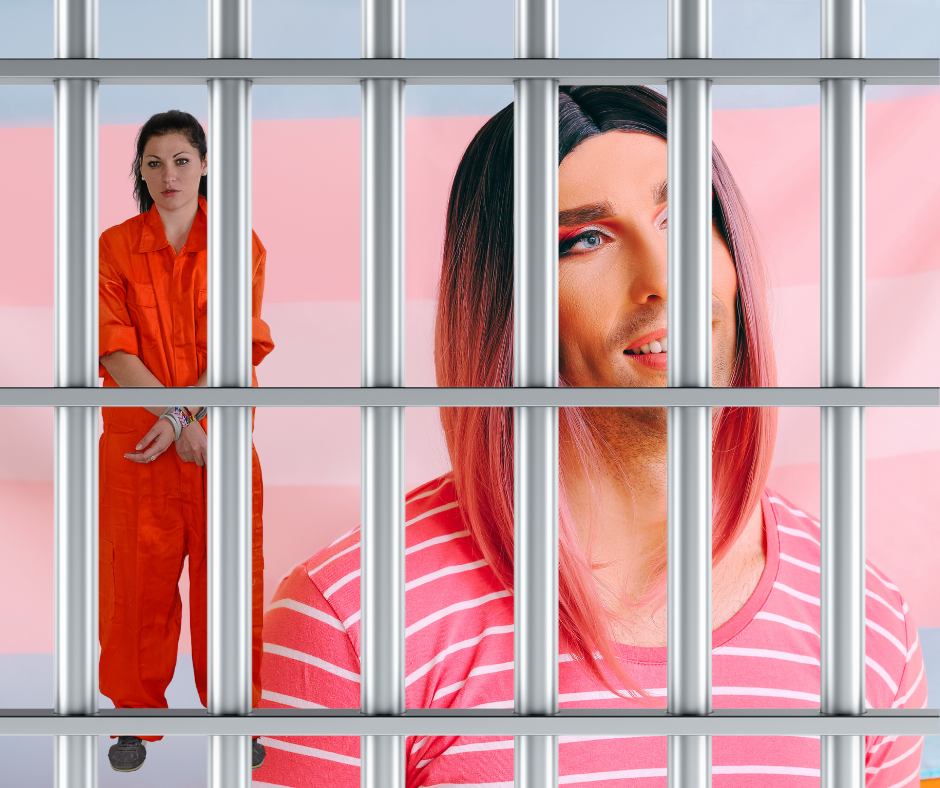
A convicted child sex offender who identifies as a woman is currently serving a 40-year sentence inside a women’s prison in Maine, a situation that highlights a policy many Americans have been warning about for years. The inmate, Nathan Venable, sexually abused a young girl over a period of years and was convicted on multiple charges related to the assault and exploitation of a minor. Despite those facts, the Maine Department of Corrections now classifies Venable as a female inmate and houses him in a women’s prison.

A transgender sex offender is now being held at a women’s prison in Maine while serving a 40-year sentence for the repeated sexual assault of a young girl. Nathan “Natasha” Venable was referred to as a “woman” by news outlets who covered his conviction, with none giving any indication he was male. – Reduxx.info
Cases like this illustrate where the push to erase biological boundaries between men and women eventually leads. Women’s prisons were created for a reason, just as women’s locker rooms, sports teams, shelters, and bathrooms exist for a reason. Those spaces exist because societies long understood a simple reality: men and women are different, and women deserve privacy and protection from male bodies in vulnerable settings.
The Maine case is not an isolated situation. Several states now allow inmates to request placement in prisons based on gender identity rather than biological sex, a policy that has quietly placed some male prisoners inside women’s facilities across the country.
Supporters say the policy protects transgender inmates who might face violence in male prisons. Instead, it puts female prisoners in harm’s way.
And examples are beginning to pile up.
10 years ago, a man murdered his parents and dog, stabbing them to death in cold blood. Now, Andrew says he is a woman, and is being lodged in a women’s prison, where MANY complaints have been filed against him for sexual harassment and assault.
“One recent evening at the Maine… pic.twitter.com/jf8rEVzQAU
— Rep. Laurel Libby (@laurel_libby) March 8, 2026
The Policy Spreading Across the Country
California became one of the most prominent examples after lawmakers passed a 2021 law allowing inmates to request placement based on gender identity. In the first year alone, hundreds of male inmates asked to transfer into women’s facilities, and state officials approved dozens of those requests.
Concerns followed quickly. Reports later surfaced that female inmates in California had become pregnant after sexual encounters with transgender inmates housed in women’s prisons.
New Jersey faced a similar controversy in 2022 when two female inmates at the state’s only women’s prison became pregnant after sex with a transgender prisoner housed there. The incident forced prison officials to review their housing policies and drew national attention.
Minnesota corrections officials have also acknowledged housing male inmates in the state’s women’s prison after they identified as female. Other states, including Washington, Oregon, Massachusetts, and Maine, have adopted policies that allow some form of housing placement based on gender identity.
No national database tracks how many biological males are currently housed in women’s prisons across the United States. Each state sets its own policies, and many prison systems release little information about how those decisions are made.
But the cases that surface tell a consistent story. The policy is spreading.
This Fight Is Bigger Than Prisons
This fight over women’s spaces is not limited to prisons. It is part of a much larger cultural battle over whether women are even allowed to defend their own boundaries anymore. That reality played out recently at an International Women’s Day event in the United Kingdom, where women’s rights activist Kellie-Jay Keen was escorted out after challenging gender identity ideology. The moment says a lot about where this debate has gone. An event meant to celebrate women removed a woman for insisting that biological sex still matters.
Watch the clip and ask yourself a simple question: how long before scenes like this become routine in the United States?
Some American women are already speaking up. Athletes like Riley Gaines have become national voices defending women’s sports, while advocates like Jennifer Sey continue to warn that the same policies affecting sports will eventually reach other female spaces as well. But the truth is that many women still hesitate to speak publicly because they know exactly what happens next. They get shouted down, labeled bigots, or pushed out of the conversation entirely.
That pressure only works if women accept it.
Women Behind Bars Still Deserve Safety
Lost in this debate is a basic reality that too many policymakers seem willing to ignore. Women in prison are still women.
Many female inmates already carry histories of abuse, violence, and trauma at the hands of men. Correctional systems have long recognized those vulnerabilities, which is one reason prisons have traditionally separated male and female populations.
Prison is punishment for a crime, but it is not supposed to strip women of their dignity. It is not supposed to force them to share showers, sleeping quarters, and daily living space with biological males.
Yet that is exactly what some of these policies now require.
Advocates often frame the issue as compassion for transgender inmates. Compassion, however, should not come at the expense of other people’s safety. When prison systems move male inmates into women’s facilities, they effectively ask female prisoners to surrender boundaries that society still recognizes almost everywhere else.
Women do not lose their right to privacy or personal safety simply because they are incarcerated.
Democrats lock violent male convicts in cells with women. They have no respect for women’s rights at all.https://t.co/BeXrzcYvtd
— LoveHerMadly (@Xlovehermadly) February 16, 2026
The Question We Should Be Asking
At its core, this debate comes down to a simple question that many officials appear reluctant to answer directly.
Should gender identity override biological sex inside prisons?
Prisons are among the most controlled environments in society. If authorities cannot maintain clear boundaries between men and women there, it becomes much harder to explain why those boundaries should exist anywhere else.
The Maine case may be extreme, but it forces the issue into the open. A biological male convicted of sexually abusing a child now lives inside a facility built to house female inmates.
Policies like that raise difficult questions about safety, privacy, and common sense. They also remind us of something that should never have been controversial in the first place.
Women in prison are still women, and their dignity and safety should not be negotiable.



One thought on “Male Inmates in Women’s Prisons: Why Female Prisoners Are Being Put at Risk”