
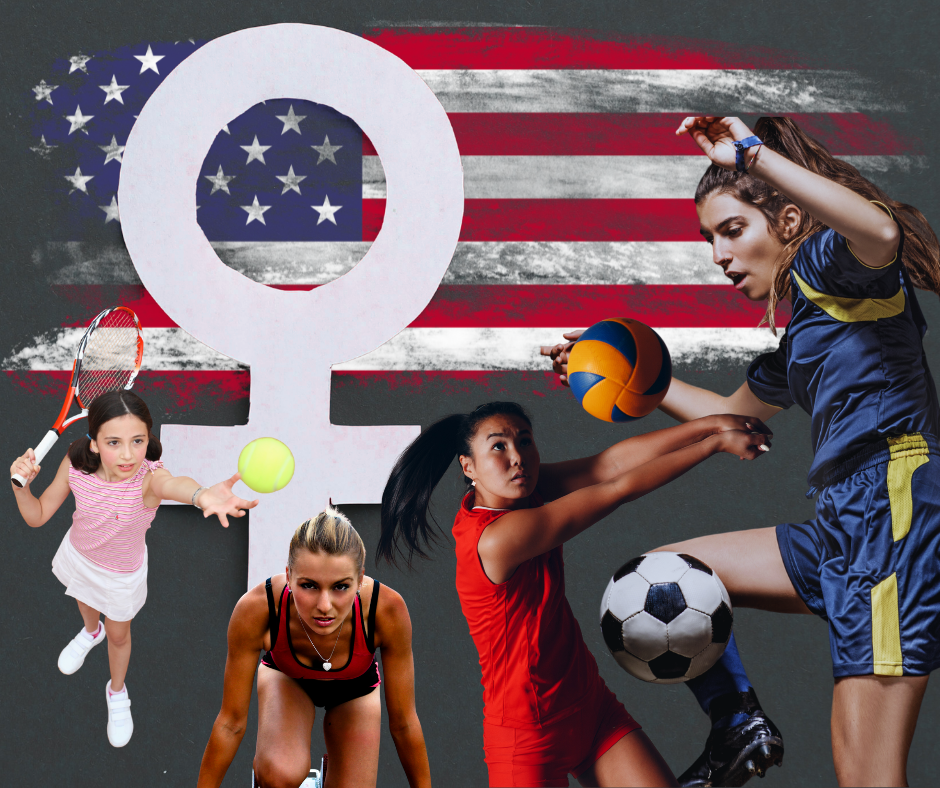
If you have been reading An Americanist for any length of time, you have probably noticed a category called The XX Files. That is where I tend to file stories about women’s sports, women’s spaces, and the growing debate over policies that blur the line between male and female. This week’s headlines out of Colorado fit that category perfectly.
The newest example comes out of Colorado. A school district there recently landed on the wrong side of a federal Title IX ruling. Investigators said the district adopted policies allowing male students who identify as female to access girls’ bathrooms, locker rooms, overnight accommodations, and sports teams. What might sound like a local school dispute is really part of a much larger fight over what Title IX actually means.

March 13, 2026
Today, the U.S. Department of Education’s Office for Civil Rights (OCR) concluded that Jefferson County Public Schools in Colorado has violated Title IX of the Education Amendments of 1972 (Title IX) by permitting male students to access female bathrooms, locker rooms, and overnight accommodations, and to compete in female sports.OCR concluded that Jefferson County’s policies allowing access to intimate facilities and participation in sports based on ‘gender identity’ discriminates against females by denying them safety, dignity, and equal access to educational programs and activities. OCR received athletic rosters from Jefferson County indicating that male students may occupy up to 61 roster positions on girls’ sports teams in the District. – ed.gov
Over the past few years, the law has been caught in what can only be described as a legal ping-pong match. Different administrations have interpreted the same statute in very different ways. Schools have been left trying to keep up while courts and federal agencies argue over what the law actually requires.
To understand why this keeps happening, it helps to go back to the beginning.
BREAKING: The @usedgov has concluded that @JeffcoSchoolsCo in Colorado has VIOLATED Title IX by allowing males to invade female restrooms and sports.
The district has now been issued a Resolution Agreement instructing them to:
-Rescinding polices allowing males to invade… pic.twitter.com/PYPkTxTU5Q
— Libs of TikTok (@libsoftiktok) March 13, 2026
What Title IX Was Originally Designed To Do
Title IX became law in 1972. The statute itself is short and direct. It says that no person in the United States shall be discriminated against on the basis of sex in any education program that receives federal funding.
For decades, the meaning seemed straightforward. Schools could not discriminate against students because they were male or female. One of the biggest effects of Title IX was the rapid growth of women’s athletics. Schools created new girls’ teams, scholarships expanded, and female athletes gained opportunities that had not existed before.
This is all great news, whether you enjoy watching women’s sports or not.
The law also reinforced the idea that male and female sports teams were separate categories. That structure existed so female athletes could compete fairly.
For roughly fifty years, the assumption was simple. When the law referred to sex, it meant biological male and biological female.
Then the debate began to shift.
Back in the mid-1960s, a new term had already been introduced into academic circles. The phrase was “gender identity.” Over time, that concept would begin working its way into law, policy, and eventually the interpretation of Title IX.
When the Definition of Sex Started Changing
Over the past decade, legal arguments began focusing on whether discrimination claims involving gender identity should also fall under the category of sex discrimination.
Some activists argued that protecting transgender students required expanding how the law was interpreted. Others argued that doing so would erase the sex-based categories that Title IX was designed to protect.
These debates slowly moved from academic circles into government policy.
Federal agencies began issuing guidance encouraging schools to treat gender identity claims as protected under Title IX. Schools in many states began adjusting their policies to reflect that interpretation. Bathrooms, locker rooms, and sports participation became the most visible areas of conflict.
Then the federal government formally expanded the interpretation.
The Biden Administration’s Title IX Expansion
During the administration of Joe Biden, the Department of Education issued regulations stating that discrimination claims involving gender identity and sexual orientation could fall under Title IX protections.
Under that interpretation, schools could face federal consequences if they failed to accommodate students based on gender identity claims. This affected policies involving bathrooms, locker rooms, pronouns, and athletics.
Supporters argued the rule protected transgender students from discrimination and harassment. Critics argued the administration had effectively redefined the meaning of sex without Congress changing the law itself.
When boys play in girls’ sports, there are no girls’ sports. pic.twitter.com/zIOXUXeBqp
— Jennifer Sey (@JenniferSey) March 12, 2026
The Trump Administration Moves Enforcement Back
The Colorado investigation reflects a shift in enforcement under the Trump administration.
Federal officials are now moving back toward interpreting Title IX according to biological sex, particularly in areas such as girls’ sports and private facilities. That shift is what brought Jefferson County Public Schools under federal investigation.
Investigators concluded the district’s policies allowed male students access to girls’ sports teams and female locker rooms, which they say violates Title IX protections for female students.
The district has now been ordered to change those policies or face potential consequences tied to federal education funding.
The Lawsuits and the Patchwork System
The policy changes did not go unchallenged.
Several states filed lawsuits challenging the Biden administration’s regulations. Federal judges blocked the rule in some jurisdictions while allowing it to proceed in others.
The result was a confusing patchwork across the country. In some states, schools were required to follow the expanded interpretation of Title IX. In others, courts ruled those regulations could not be enforced.
School districts suddenly found themselves navigating rules that changed depending on where they were located and which court rulings applied.
In other words, Title IX had become a legal tug-of-war.
🚨🧵 BREAKING: Dept of Ed releases it’s long-delayed #TitleIX rule interpreting the law which prohibits sex discrimination in education.
THE PROBLEM: It erases women and girls, ignores the constitution, eliminates due process, and compels speech.
In short, it’s ILLEGAL.
— Sarah Parshall Perry (@SarahPPerry) April 19, 2024
Why Schools Are Caught in the Middle
For school administrators, this debate has created a difficult situation.
Policies have changed repeatedly as federal guidance, court rulings, and political priorities shift. Districts that followed one set of rules a few years ago may now find those same policies under investigation.
The law itself has not changed. Congress has never rewritten Title IX to clarify how these claims should be treated.
What has changed is the interpretation.
The Fight Over Title IX Is Not Over
The Colorado case will not end the debate. It is simply the latest chapter in a much larger legal fight.
Title IX itself is not complicated. The law was written to prevent discrimination based on sex and to ensure that women and girls have equal opportunities in education and athletics.
What has changed over the past decade is not the law but the effort to reinterpret it.
For now, federal enforcement has swung back toward protecting biological sex. But it would be naïve to assume the debate is finished. The activists who pushed these policies into schools and federal agencies are unlikely to walk away quietly.
The legal ping-pong may pause for a moment, but the fight over Title IX is far from over.


2 thoughts on “How Title IX Became a Legal Ping-Pong Match in American Schools”