
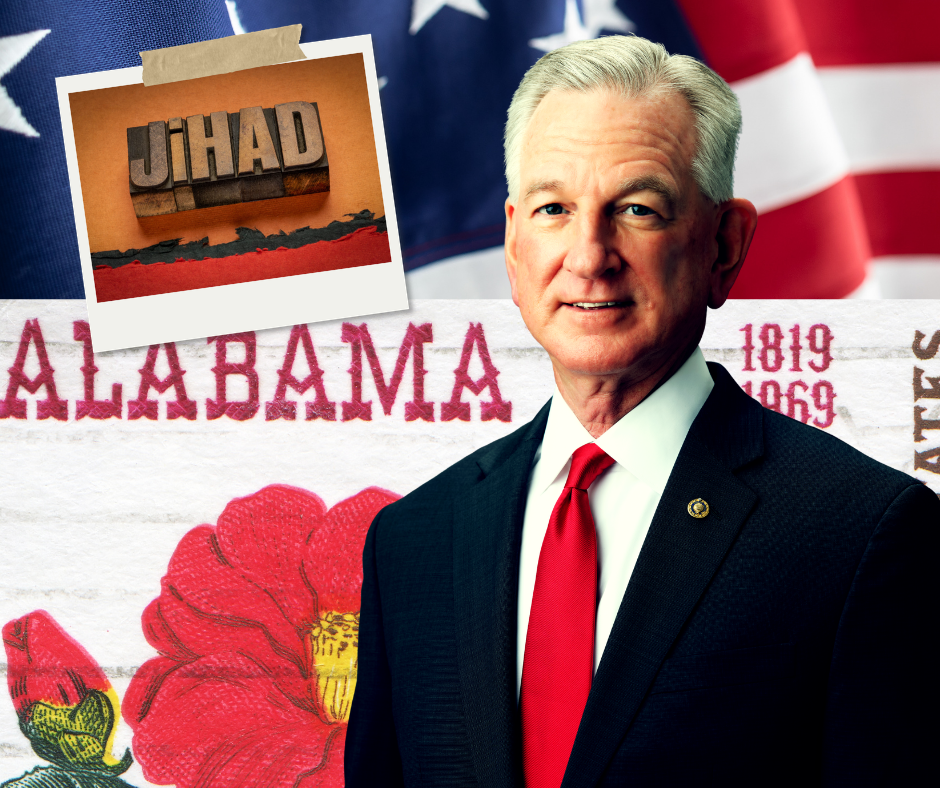
Tommy Tuberville has been sounding the alarm about jihadist threats in America.
He’s warning about enemies inside the gates. He’s calling it an urgent national security issue. And on that point, he’s right. Radical Islamist ideology exists. There have been attacks. Ignoring that would be foolish.
I like Tommy Tuberville, and I’ll likely vote for him for governor. I want strong leadership in this state, and I don’t question the need to take national security seriously. At the same time, supporting someone doesn’t mean you stop looking at what’s actually happening around you.
We should be paying attention.
JUST IN: @SenTuberville tells me on Newsmax he does not regret saying the enemies are inside the gates.
“We have to wake up now. We have to talk about it. A lot of my Republican colleagues won’t talk about it because they’re afraid they’ll lose a vote. Folks, it’s time to quit… pic.twitter.com/vnk4BkN3SH
— toddstarnes (@toddstarnes) March 16, 2026
Just wait until I become the next Governor of Alabama…
Sharia Law has NO PLACE in our schools. https://t.co/a3KIBVMm2U
— Tommy Tuberville (@CoachForGov) March 16, 2026
🚨 EPIC: Sen. Tommy Tuberville claps back at reports he merely “suggested” Muslims are the enemy.
“To be clear, I didn’t ‘SUGGEST’ Islamists are the enemy.
I said it PLAINLY.”He’s right! pic.twitter.com/YXMvG6xDHE
— Gunther Eagleman™ (@GuntherEagleman) March 12, 2026
A National Threat Doesn’t Mean a Local Crisis, Yet
At the same time, not every part of the country looks the same. That matters more than people want to admit.
I live in Alabama. I go about my day like everyone else. And what I see here does not look like an immediate crisis unfolding in front of us. That’s not denial. That’s just reality where I am.
A national threat does not automatically mean a local emergency. That distinction gets lost in these conversations. It shouldn’t.
There’s a tendency right now to treat the entire country like it’s on the same timeline. It isn’t. States like New York and Texas have large, concentrated Muslim populations and hundreds of mosques. Michigan and Minnesota have well-established communities that have grown over decades.
Alabama does not.
Here, the Muslim population is smaller and more spread out. There are far fewer mosques and far fewer concentrated communities. That doesn’t mean nothing could ever change. It means the starting point is different.
And starting points matter.
Now, to be fair, people in parts of Michigan or Minnesota may have said something similar years ago. Nothing to see here. Over time, things did change. So no, this is not an argument for ignoring what’s happening across the country.
It’s an argument for understanding where you are right now. Because there is a difference between staying aware and assuming the same conditions exist everywhere.
Cultural Changes in States Like California
You can see that difference when you look at states like California, where lawmakers are moving to recognize Muslim holidays like Eid. That’s not about terrorism. That’s about cultural recognition and accommodation. You can agree with it or disagree with it, but it’s a separate issue from national security.

A California Democratic lawmaker introduced legislation last week that would recognize two Muslim holidays as official state holidays.
AB 2017 would designate Eid al-Fitr and Eid al-Adha as state holidays, a move that Assemblymember Matt Haney (D-San Francisco) said would guarantee Muslims in California are “seen, valued and treated with the same dignity as every other community in our state,” according to FOX 11.
The lawmaker said the California Muslim community is one largest in the country, yet they do not have major holidays recognized by the state in the way other religions do — like Christmas or Easter. – New York Post
You can see how different this looks in other parts of the country. In California, lawmakers are now pushing to recognize Muslim holidays like Eid as official state holidays. One lawmaker argued that “no student should have to choose between celebrating one of the holiest days of their faith and showing up to school.”
For years, we’ve been told that religion has no place in public institutions, especially in schools. Now suddenly, the state is being asked to formally recognize and accommodate religious observances. Students are already free to practice their faith. They don’t need the government to validate it with a law.
When Everything Gets Blurred Together
It also highlights something bigger. The United States has long been shaped by Judeo-Christian values. That foundation influenced everything from our laws to our traditions. That doesn’t mean other religions can’t be practiced here. They absolutely can. But recognizing that foundation matters, especially when new policies start to shift how religion is treated in public life.
Right now, too many of these conversations are being lumped together.
A cultural shift in one place gets treated like a security threat in another. A national concern gets framed like it’s already unfolding in every state. And that’s where things start to feel disconnected from reality.
We should take threats seriously. We should be honest about what exists. But we should also stay grounded in what we can actually see in front of us.
Here in Alabama, that means recognizing two things at once.
The threat exists.
The enemy is inside the gates. https://t.co/YSNHIpDnds
— Coach Tommy Tuberville (@SenTuberville) March 12, 2026
And we’re not dealing with the same conditions you see in states where these issues are more visible and more established.
Both of those things can be true.
If that ever changes here, I’ll say so. But for now, I’m going with what I can actually see. Awareness matters. So does perspective.
Right now, Alabama doesn’t match the urgency being described.
Feature Image:Rebecca Hammel on behalf of the U.S. Senate, Public domain, via Wikimedia Commons/edited with Canva Pro




One thought on “Tommy Tuberville Warns of Jihad Threats—What It Looks Like in Alabama”