Another week, another story involving a boy in girls’ sports. This time, it’s a Michigan lacrosse player who was reportedly transitioned at age six and is now competing on a girls’ team. Before that, it was AB Hernandez. And before that, it was Lia Thomas. It was a growing list of stories that all seemed to end in the same place: a public fight over sports, schools, pronouns, or policies.
🚨A male student who “identifies” as a girl has reportedly been concealing his biological sex in order to play on a girls high school lacrosse team in Michigan.
Branson “Sophie” Waitz was transitioned by his parents when he was just 6 years old. https://t.co/o0N1STpQMZ
— REDUXX (@reduxx) May 28, 2026
How Childhood Became An Identity Project
What strikes me is how rarely anyone asks how these stories started.
By the time a controversy reaches a lacrosse field, the real decisions have already been made. The child has already been transitioned. The parents have already been convinced. The schools have already adopted the policies. The experts have already weighed in. The advocacy groups have already distributed the resources. The media has already told the public which questions are acceptable and which ones are not.
At this point, we cannot go back and undo any of it.
The children who were transitioned a decade ago are now teenagers and young adults. The schools adopted the programs. The organizations built the networks. The activists pushed the message. What’s done is done.
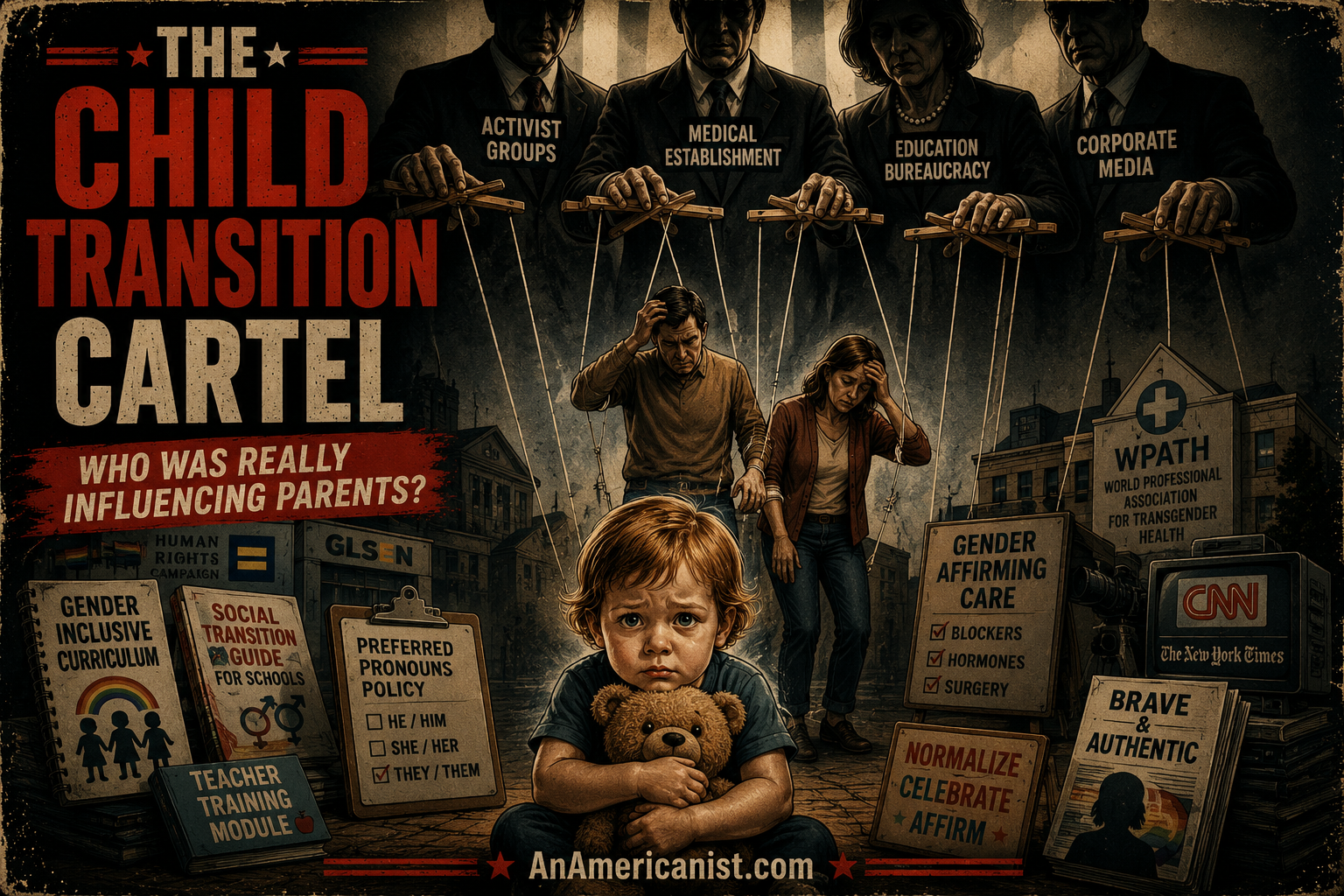
Because somewhere between a little boy playing dress-up and a teenager competing in girls’ sports, a whole collection of activists, nonprofits, educators, medical professionals, and media figures convinced America to see childhood through an entirely different lens. If we’re finally going to have an honest conversation about the results, then we should probably spend some time talking about the people who sold the idea in the first place.
The Boy Was Never The Beginning Of The Story
The easiest thing in the world is to argue about the athlete. Every new case triggers the same predictable debate, with one side insisting there is no issue and the other pointing to biology.
The Michigan athlete didn’t wake up at seventeen and suddenly decide he was a girl. AB Hernandez didn’t appear out of thin air. Somewhere along the way, adults became involved. Parents made decisions. Schools made decisions. Counselors made decisions. Advocacy groups offered guidance. Medical professionals offered recommendations.
The sports controversy is simply where the public finally notices.
Everybody Was Reading From The Same Script
When you look back at the Obama years, a pattern starts to emerge.
The Human Rights Campaign was one of the biggest players in this space. You’ve probably seen their logo before. Back in the Obama years, that blue square with the yellow equal sign spread across social media faster than cat videos. Celebrities posted it. Politicians posted it. Corporations posted it. For a while, it felt like joining a digital loyalty program for enlightened people.
If you’re standing in the way of equality, hear this: 92. 74. 10.
92% of LGBTQ+ Americans are fired up to vote.
74+ million Equality Voters are ready to organize.
10% of the electorate is LGBTQ+—and growing.
And HRC has a plan to win in November: https://t.co/TXVP03LENx pic.twitter.com/gznOu8h9iO
— Human Rights Campaign Rapid Response (@HRC) May 14, 2026
Most Americans associated the Human Rights Campaign with same-sex marriage and broader gay rights issues. What many did not realize was that the organization was also becoming increasingly involved in shaping conversations around childhood gender identity, schools, and transgender policies.
The Human Rights Campaign was creating resources for parents and schools.
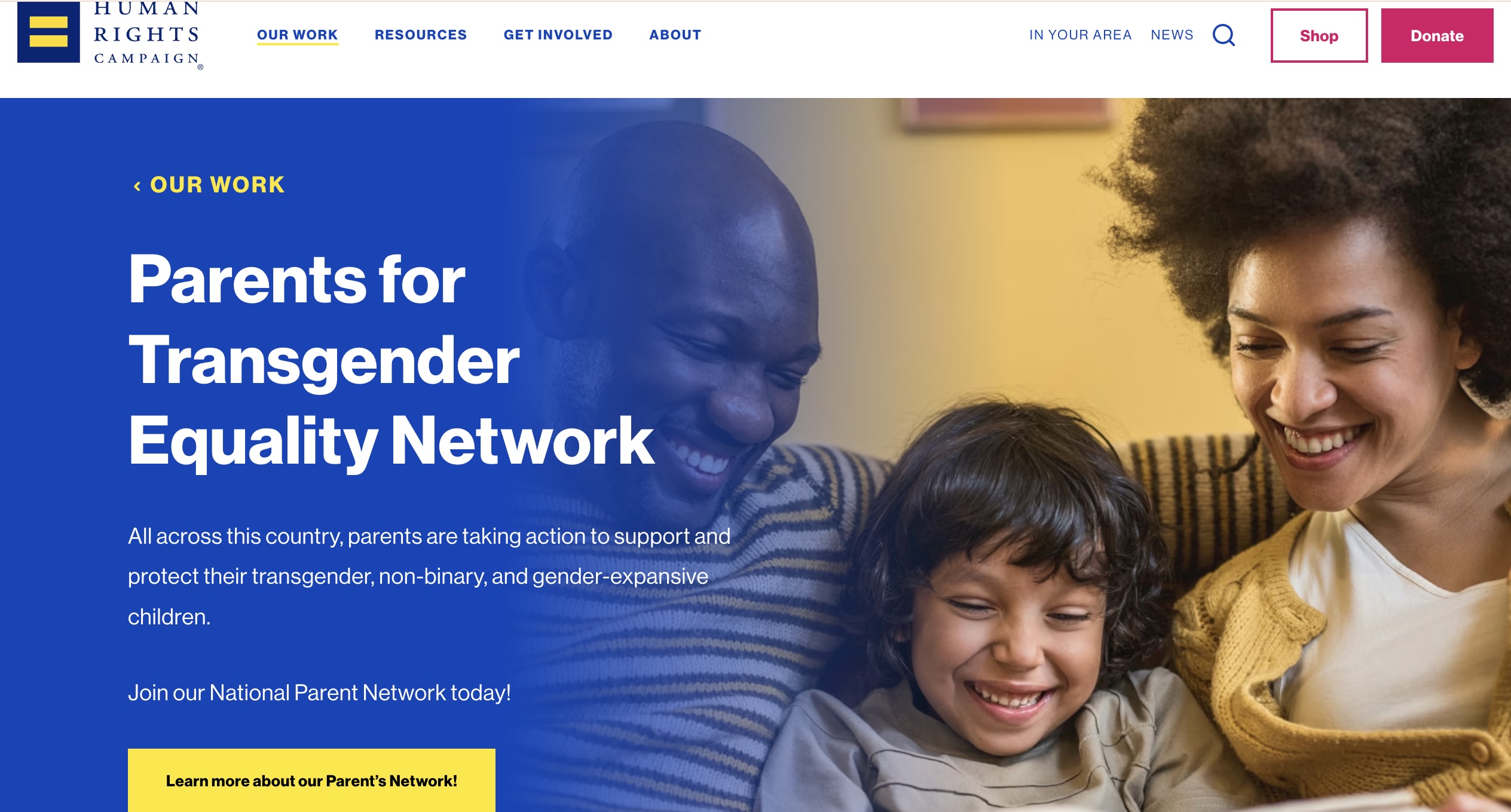

Welcome to our community of parents dedicated to advocating for and championing the rights and well-being of our transgender, non-binary, and gender-expansive youth. As parents and caregivers, we understand the impact that supportive environments, equal opportunities, and inclusive policies can have on the daily lives of our children. We are united by a common purpose: to advocate tirelessly for the rights, dignity and respect, and future of our young people.
Through collaboration, education, and activism, the HRC National Parents for Transgender Equality Network is determined to create a world where our children can dream and flourish without limitations.
As part of this Network, you will be connected to other parents regionally and nationally to share resources, to receive alerts for impactful actionable advocacy opportunities, and to mobilize to protect and support trans youth directly with HRC through policy briefings and webinars. – HRC
The Human Rights Campaign is peddling what I consider to be profound child abuse, plain and simple. How we reached a point where major organizations are encouraging adults to treat childhood confusion as a lifelong identity crisis is beyond me.
And they are not alone in this sickening mission:
Gender Spectrum was building materials for families and educators.
GLSEN was working with school districts and teachers.
The real story is not the latest athlete. The real story is the network of organizations that spent years convincing parents, schools, and the public that this was compassionate and necessary. We should all spend more time exposing the networks who are pushing this child abuse.
Sunlight has a funny way of changing people’s behavior.
The Great Sorting Project
When I was in school, we were just kids. The jocks hung out with the jocks. The band kids hung out with the band kids. The smart kids sat with the smart kids. And everyone got along with each other. Nobody was running around with a clipboard trying to sort us into an ever-expanding collection of identity groups.
These days, it feels like adults are determined to hand every child a label before they are old enough to drive. Race. Gender. Sexuality. Identity. Everybody gets a category and a grievance package to go with it.
The funny thing is that we’re constantly told this is supposed to bring people together. From where I’m sitting, it seems to do the exact opposite. The more labels we create, the more groups we create. The more groups we create, the more conflict there is to manage.
The Label-Making Machine
Of course, that works out pretty well for the advocacy organizations. A country full of ordinary kids who see themselves as individuals doesn’t need nearly as many consultants, workshops, campaigns, fundraising drives, and awareness months. A country full of carefully sorted identity groups, on the other hand, can keep an entire industry employed.
It was only a matter of time before this label-making machine turned its attention to children. A boy with a gentle personality was no longer just a boy with a gentle personality. A little girl who preferred baseball to ballet was no longer just a tomboy. Suddenly there were experts, advocacy groups, school programs, and support networks ready to explain what it all meant.
Meanwhile, major media outlets were publishing glowing profiles of families navigating childhood gender transitions.
And FYI, terms like gender identity and gender roles are relatively modern concepts that came out of psychology and academia in the 1950s and 1960s. For most of history, people talked about biological sex, not an internal sense of “gender.”
Parents worried about a child who did not fit traditional gender stereotypes were often met with the same basic message. Affirm. Support. Validate. Celebrate.
What Parents Were Actually Being Told
Parents were not simply being told to love their children. Parents have been doing that forever.
They were being told that affirmation was the safest and most compassionate path. Organizations were producing guides. Schools were receiving training materials. Support groups were reinforcing the same message. Media stories routinely portrayed affirming parents as brave and enlightened while presenting skepticism as backward or harmful.
There are so many in positions of power responsible for perpetuating the nonsense of “trans ideology,” but one group I especially want to see held accountable is the media.
Here’s a news outlet from 2023 calling a 10-year-old boy a “lesbian”https://t.co/jFTgt28Jwt
— HeCheated.org (@hecheateddotorg) March 2, 2026
At the same time, pediatric gender clinics were rapidly expanding across the country. What had once been a niche issue was becoming an established network of advocacy organizations, educational programs, medical services, and cultural messaging.
The question is not whether these groups believed they were helping.
The question is whether anyone bothered to ask what would happen ten years later.
The Experts Were Astonishingly Certain
This is the part I still struggle to understand.
A six-year-old cannot vote, drive, or remember where he left his shoes. Most six-year-olds cannot decide what they want for lunch without changing their minds twice.
Yet somehow, a great many adults became convinced that children possessed a deep and reliable understanding of concepts that remain the subject of intense debate among doctors, researchers, psychologists, parents, and policymakers.
Questions were often treated as harmful. Hesitation was viewed with suspicion. Parents who expressed concerns could find themselves surrounded by experts who seemed remarkably certain they already knew the answer.
For a movement that constantly invoked science, there was an awful lot of confidence and not nearly enough humility.
Trump Is Fighting The Symptoms
Since returning to office, President Trump has issued executive orders aimed at reversing parts of this agenda. Some states have passed laws restricting pediatric gender medicine. Others have moved to protect girls’ sports.
Those efforts matter.
At the same time, executive orders cannot erase a decade of activist messaging, school policies, media narratives, and institutional pressure. A president can change federal policy. He cannot rewind the culture.
Washington is finally arguing about the outcomes.
I am more interested in the people who spent years creating the conditions that produced them. I’d like to see these harmful organizations defunded and dismantled.
Somebody sold parents this idea. Somebody built the organizations, wrote the brochures, created the school programs, trained the educators, and convinced the media to celebrate it. And they are still out there doing it.
Now that the consequences are showing up in public, nobody seems eager to talk about their role in making it happen.
That alone should tell you something.
Feature Image: AI-generated illustration.