When Identity Becomes a Demand on Women
The claim that adults should be free to live as they choose is often treated as the final word in debates over gender ideology (a made-up term). Supporters frame it as a matter of tolerance and use it to shut down scrutiny. That framing does not reflect what is actually taking place. The issue is not private behavior or personal expression. It is what happens when an ideology demands recognition, enforcement, and political power.
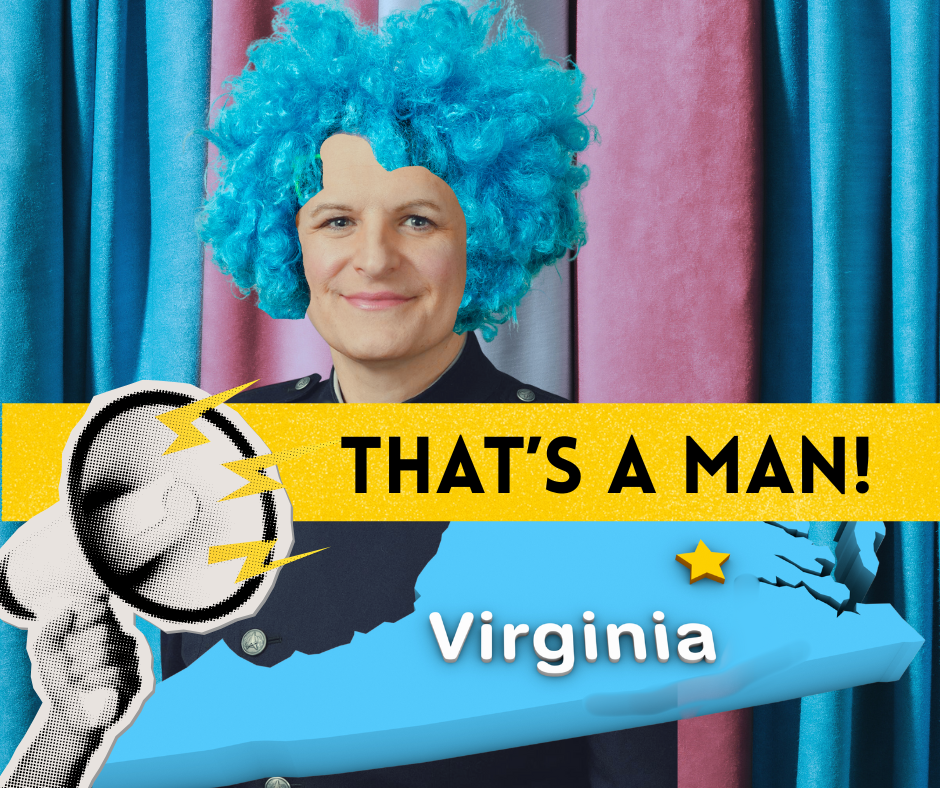
The congressional run of Bree Fram, a biological male who pretends to be a woman, brings that problem into focus. Fram is running as a Democrat for a seat in the U.S. House of Representatives. This is not about how one adult lives. It is about whether women are required to accept a redefinition of their sex in law, language, and political representation.
More transvestites in Congress? Bree Fram, who was in the Air Force and Space Force before Trump forced him out of the armed forces, is running for Congress in the late Gerry Connolly’s deep-blue Virginia district, which includes the city of Fairfax. pic.twitter.com/9KgfGRJE7E
— Breitbart News (@BreitbartNews) January 23, 2026
The move from tolerance to obligation
For years, the public was told that claiming a ‘gender identity’ was simply a matter of personal freedom. The reassurance was consistent. This would not affect anyone else. No one would be forced to participate. No laws would need to change. People were only asked to be kind and mind their own business.
That promise did not hold.
Gender identity did not remain a private matter. It became a framework imposed on institutions, enforced through policy, and defended through moral pressure. Language was rewritten. Sex-based categories were reinterpreted. Disagreement was reframed as harm. What began as a request for tolerance evolved into an expectation of compliance.
Once that shift occurred, the argument about personal freedom stopped applying. An ideology that requires public affirmation and legal recognition is no longer personal. It is political.
Identity claims are not neutral in law
Law depends on shared definitions. Categories such as male and female exist because they describe biological reality, not because they reflect personal belief. Women’s legal protections were built on sex because sex has material consequences. Those consequences do not disappear when language is changed.
When a biological male claims womanhood and seeks office as a woman, that claim does not stay symbolic. It reshapes how representation is understood. By pressuring institutions to treat identity as equivalent to sex, it weakens the legal clarity women rely on in areas such as sports, prisons, medical care, and education.
These outcomes are already visible in policy debates and court rulings. Replacing sex with identity does not expand rights without cost. It shifts who those rights are for.
The confusion created by this redefinition is not abstract. Bree Fram is married to a woman and has children. Under ordinary language, that would describe a heterosexual marriage between a man and a woman. Under gender ideology, the same relationship must now be described differently, not because the facts changed, but because language is being compelled to change.
Congress raises the stakes
Running for Congress is not a personal statement. It is an attempt to gain authority over federal law. Members of Congress shape legislation that affects every state and every institution subject to federal standards.
This matters because Congress already includes a male with this same fetish, Tim McBride, who uses the name Sarah. That fact changes the context. What was once framed as symbolic is now becoming normalized. Repetition turns ideology into precedent, and precedent becomes policy. The assumption seems to be that if this occurs in Congress, a place meant for serious governance, then the redefinition must be legitimate and unquestionable. The question is no longer whether such candidacies are allowed. They clearly are. The question is whether women are expected to accept that their political category can be claimed by anyone who declares it.
Virginia and the next phase of ideological capture
For years, ideological takeovers were easiest to spot in big cities. Places like New York City and Minneapolis became testing grounds for progressive activism, where socialism, criminal justice experiments, and identity politics were openly embraced and repeatedly rewarded at the ballot box. Voters came to expect that kind of leadership from cities that had long been controlled by one party.
What has changed is where this is now happening.
States like Virginia, especially its northern suburbs, are not being pulled left by old-style socialism so much as by gender ideology. This shift is quieter, but it is no less serious. Areas tied closely to federal power and professional bureaucracy tend to reward conformity. Following the approved language is treated as competence. Questioning it is treated as a liability.
A congressional campaign built around gender identity is not a fluke in that environment. It reflects what is encouraged and protected in these regions. While activist cities pursue ideological change openly, places like Virginia are being reshaped through language, policy interpretation, and institutional agreement. The result is a kind of capture that does not look radical at first but settles in just as firmly.
Women are not an identity category
Women are a sex class. That is a biological fact with legal relevance. Women’s political representation exists because sex shapes risk, opportunity, and lived experience in ways law has historically recognized.
Treating womanhood as an identity rather than a sex dissolves the basis for those protections. It turns a material category into a subjective one. Once that happens, there is no limiting principle. Any boundary becomes negotiable. Any objection becomes suspect.
Women who resist this shift are not seeking to exclude others from public life. They are seeking to preserve the meaning of the category that applies to them. That is not hostility. It is boundary-setting.
Moral pressure is not consent
Supporters of gender ideology often rely on moral language rather than argument. The expectation is not merely tolerance but affirmation. Women are told that refusing to accept identity claims is cruel or dangerous. Silence is treated as the only acceptable position.
That is not how a liberal society functions. Free societies depend on the ability to disagree about contested claims, especially when those claims carry legal consequences. Compelled belief is not kindness, and enforced language is not neutrality.
When women are told they must accept a redefinition of their sex to be considered decent people, the issue is no longer about respect. It is about power.
What this debate is actually about
Adults can live as they choose. That principle is not under threat. What is under threat is the ability of women to exist as a defined political and legal category once identity replaces sex in public life.
A man running for Congress while insisting on female status is not a private choice. It is a demand that women adjust their language, their laws, and their representation to accommodate an ideology that denies biological reality.
Women are not required to accept that demand. Defending sex-based reality is not extreme. It is necessary for any system of law that claims to be grounded in truth rather than assertion.
This debate will continue whether women consent or not. The question is whether women are allowed to speak plainly while it does.
Feature Image: By US Air Force Public Affairs – Bree Fram, the person in the photograph, Public Domain, Link / edited in Canva Pro