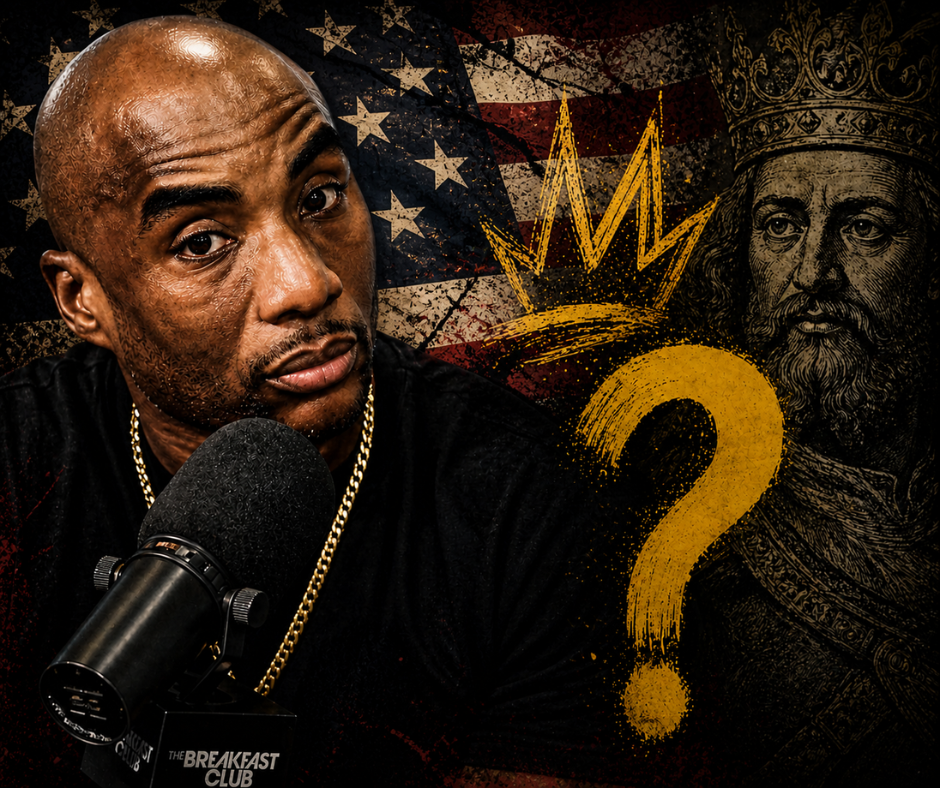
There’s a lot to say about Lenard McKelvey, who goes by Charlamagne tha God, and his latest comments on not toning down the rhetoric after the White House Correspondents’ Dinner shooting, and we’ll get there. But first, it’s worth taking a second to look at who’s actually saying it.
Charlamagne tha God said that “The Trump Administration has caused so much pain to people’s everyday lives, that some folks are fed up and willing to risk it all.”
Honest question. What pain is this administration causing that would make people say, ‘I want to kill the… pic.twitter.com/Pgm1ckMPnu
— Glenn Beck (@glennbeck) May 1, 2026
Charlamagne tha God sits across from celebrities and politicians and asks the questions, and people treat it like it matters. And maybe it does. But I keep coming back to the same thought. How did we get here? How did this become one of the voices people take seriously?
The Name
Let’s start with the name. Charlamagne tha God. It’s not subtle, and it’s not random either. It’s pulled from Charlemagne, one of the most powerful monarchs in European history, and turned into a personal brand that signals authority before a word is even spoken. In a culture that loves to call out “appropriation” at every turn, it’s a little ironic that borrowing the identity of a European king and elevating it like this doesn’t seem to raise much of a question. I’m not even saying he did that on purpose. It just stands out when you notice it.
And just to be clear, I won’t be using the “tha God” part from here on out. His name is Lenard McKelvey, and that feels a little more grounded for what we’re talking about.
The Rise
McKelvey didn’t come from some polished media pipeline, but he also wasn’t locked out of the system. He got into radio, learned the business, moved up, got fired, came back, and eventually landed on a platform that made him a national voice. That path exists. It still happens. And for someone who now talks a lot about power, barriers, and who gets a shot, it’s hard not to notice that his own story doesn’t exactly fit the version we’re usually told.
And then there’s the part of his story that tends to get brushed past a little quicker.
The Record
He’s talked about parts of it, but it still tends to get a lighter touch than you’d expect. Before the platform and the influence, there were legal problems, including arrests for marijuana possession and intent to distribute. Then there’s the 2001 case, where he was arrested on a charge of criminal sexual conduct involving a minor. That charge was later reduced to contributing to the delinquency of a minor, to which he pleaded guilty and received probation. Years later, the case was reviewed again, and no new charges were filed. Those are the facts, and they’re part of the story whether they get emphasized or not.
The Platform
And now fast forward to today. McKelvey isn’t just a radio host sitting behind a mic. He’s interviewing politicians, weighing in on national issues, and helping shape conversations that reach millions of people. That’s a different level of influence, whether anyone wants to call it that or not.
The Moment
And then there’s his reaction to the calls to turn the volume down after the White House Correspondents’ Dinner shooting. McKelvey basically rejects the whole idea and shifts the focus right back on Donald Trump.
But here’s what I’d actually like to hear from McKelvey. Where is this same energy when it comes to the language coming from the Left? Because we’ve spent years watching progressive politicians, media figures, and activists crank up the rhetoric toward Trump, tossing around words like Nazi, fascist, threat to democracy, even rapist and pedophile, like it’s just part of the daily script. I laid this out in detail in a previous piece , and it’s not fringe voices doing it. It’s mainstream, repeated over and over until it stops sounding extreme and starts sounding normal. So when McKelvey pushes back on the idea of dialing anything down, I’m left wondering what exactly he thinks that kind of language is supposed to do over time.
Wait A Second

Charlamagne Tha God on Monday denounced calls to tone down verbal attacks on President Trump following the shooting at the White House Correspondents’ Association dinner.
“The Breakfast Club” host blasted how when there are acts of political violence targeting the president or his allies, “people always say, ‘So, are we going to tone down the violent rhetoric towards Trump?’”
“Stop it!” he added. “Like, I’m sick of that narrative. I need every single media personality to direct that energy and that question toward one person, and that is Donald J. Trump. At what point do people simply say, ‘Hey, Trump, it’s clear that you’re the drama.’”
Charlamagne then referred to Trump’s reaction to the death of former FBI Director Robert Mueller. Trump said he was “glad” that Mueller, who led the special investigation into Russian interference in the 2016 presidential campaign, was dead.
After reading aloud what Trump said, Charlamagne spoke directly to Trump and asked if he realizes “there are people out there who feel the same way about you?” – The Hill
Yes, Lenard, he does. He nearly had his head blown off in Butler.
McKelvey also points to Donald Trump making comments about people after they had already died, and uses that to argue Trump sets the tone. And look, those comments weren’t great. I’m not defending them. But there’s still a difference there. Saying something ugly about someone who’s already gone is not the same thing as spending years calling a living political opponent a Nazi, a threat to the country, or worse, over and over again like it’s just normal language now. Those aren’t equal. And trying to treat them like they are is part of the problem.
So What Are We Doing Here?
And that’s really the question for me. Not just what he said, but what it means. Because if the answer to all of this is just keep pushing, keep labeling, keep turning everything into the worst possible version of the other side, then what exactly are we expecting to happen?
I don’t know. Maybe I’m missing something.
Feature Image: AI-generated