JD Vance has been everywhere lately.
Podcasts. Interviews. Television appearances. Friendly venues. Hostile venues. If there is a camera nearby, chances are the vice president has wandered past it sometime in the last few weeks.
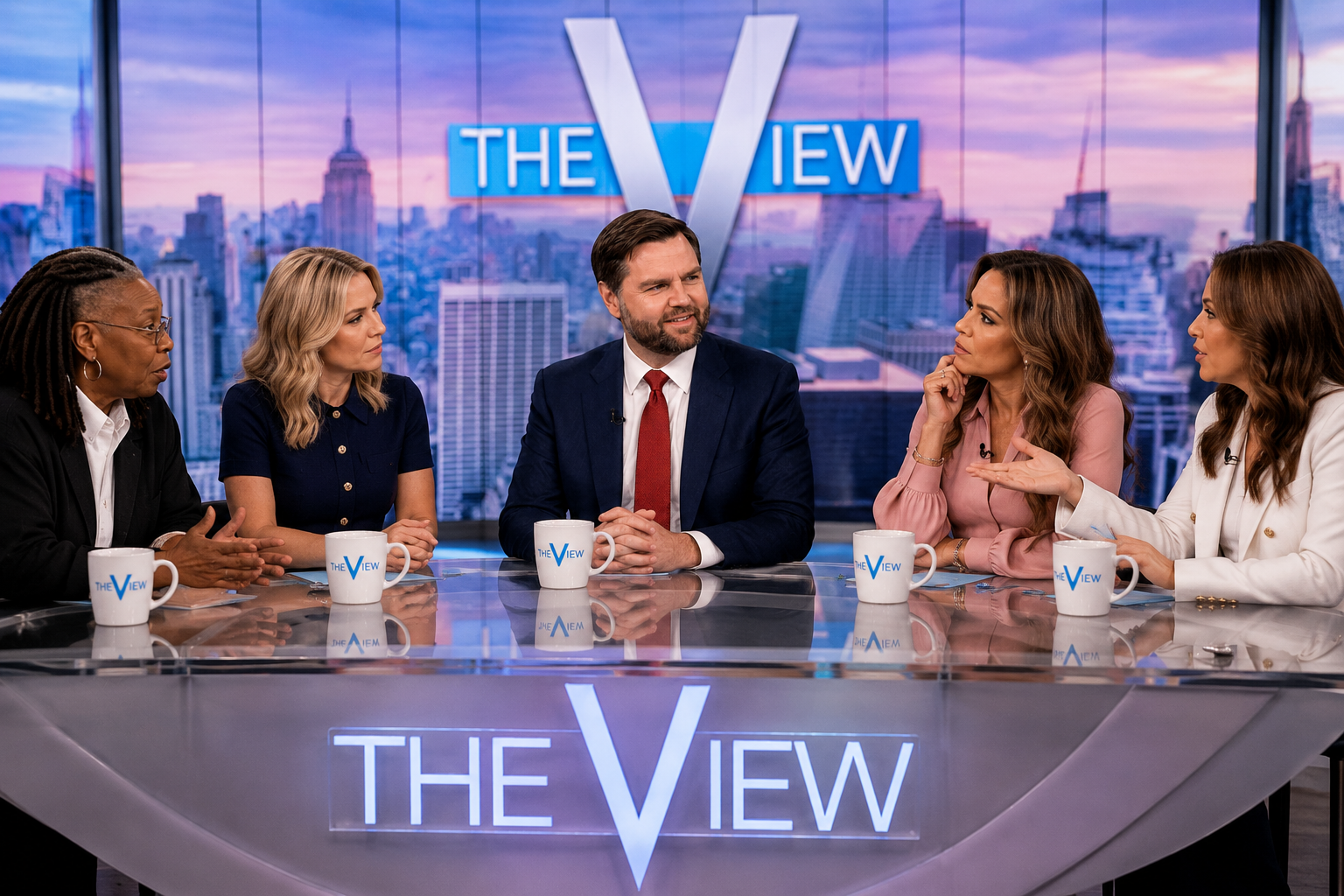
The latest stop on his whirlwind media tour was The View, which is a bit like volunteering to spend an hour inside a hornet’s nest and then acting surprised when someone gets stung.
Before anyone accuses me of criticizing the decision, let me be clear: he absolutely should do it.

In fact, I wish more Republicans would.
If you believe your ideas are better, you should be willing to take them into so-called enemy territory. You should be willing to make the case. You should be willing to persuade people. The goal is not to spend all day talking to people who already agree with you. The goal is to convince people who don’t.
Besides, every now and then someone on the other side accidentally comes to their senses.
For years, Americans have been told that JD Vance is not merely wrong. He is dangerous. Depending on the speaker, he is a threat to democracy, a threat to women, and perhaps the final obstacle standing between civilization and complete collapse.
Then he sat down with the ladies of The View.
Oddly enough, the apocalypse never arrived.
The Apocalypse Was Scheduled For 11 A.M.
Thank you to Vice President JD Vance for joining us on ‘The View’ this morning! pic.twitter.com/BrT0w2dnpg
— The View (@TheView) June 16, 2026
Given the rhetoric surrounding Vance, one could be forgiven for expecting a more dramatic reaction. Instead, the audience response was mixed but perfectly normal. Some people applauded. Some did not. Nobody rushed for the exits.
It was a surprisingly calm reception for a man who is routinely described as a threat to the republic.
Wait, I Thought We Were Supposed To Be Terrified
This is where things started to get interesting.
For years, Democrats, activists, and large portions of the media have described figures like Vance in terms usually reserved for approaching asteroids. Every election is supposedly the most important election of our lifetime, while every disagreement is treated as a constitutional crisis and every Republican victory as one step closer to the end of democracy itself.
Then viewers tuned into The View and watched what was essentially a normal political argument. There were disagreements, interruptions, and moments of tension.
In other words, it looked like politics.
The Difference Between Online Politics And Real Life
One thing I have noticed over the years is that people tend to become considerably more reasonable when they are sitting across the table from the person they have spent months denouncing online.
The internet rewards outrage. Real life rewards basic human interaction.
That may explain one of the most amusing details to emerge from the appearance.
The Compliment Heard Around The Studio
JD Vance stunned following ‘The View’, reveals what Joy Behar told him during commercial break https://t.co/vw9GfDIQKK pic.twitter.com/QQeUpJhUTr
— New York Post (@nypost) June 17, 2026
The Problem With Permanent Panic
The larger issue here is not JD Vance. It is the habit of treating every political disagreement as a five-alarm emergency.
For the better part of a decade, Americans have been subjected to a steady stream of warnings that democracy is hanging by a thread, authoritarianism is around the corner, and catastrophe is always one election away. The problem with that approach is that political language works a lot like currency. The more of it you print, the less it is worth.
The problem with permanent panic is that it eventually stops working. Voters can only hear that every Republican is Hitler, every election is the most important ever, and every disagreement threatens democracy for so long before they start questioning the premise.
That is the trap modern political commentary has created for itself. The rhetoric becomes so inflated that reality can no longer support it.
The Missing Apocalypse
That is what made Vance’s appearance on The View so interesting.
The interview was not particularly remarkable. There were disagreements, interruptions, and moments of tension, which is more or less what one expects when a conservative vice president sits down with a panel of liberal hosts. What never materialized was the sense of impending doom that so often accompanies the public discussion surrounding figures like Vance.
Instead, viewers watched a political interview. The hosts challenged him. He answered. The conversation moved on. By the end of the hour, nobody had witnessed the collapse of democracy, and Joy Behar was reportedly complimenting him during commercial breaks.
The most revealing part of the entire episode was not what happened. It was what didn’t happen. Americans were promised an apocalypse. What they got was a daytime talk show.
Feature Image: AI-generated illustration.