
“Empires never die quietly. We must END the American empire regardless.”
That’s what Hasan Piker told students at Yale. He went on to warn that its fall would likely turn violent if not “managed.” That wasn’t taken out of context. That wasn’t a bad clip. That was the message. And the room applauded.
INSANE: Yale University, who takes MILLIONS of TAXPAYER DOLLARS, invited leftist streamer Hasan Piker to speak to students about “ENDING the American Empire” with VlOLENCE
We need to stop funding these communist indoctrination camps IMMEDIATELY.
PIKER: “Empires never die… pic.twitter.com/uvKDTcuHQy
— Nick Sortor (@nicksortor) April 15, 2026
Not a Throwaway Line
That wasn’t a one-off line tossed out for effect. It wasn’t a joke that landed wrong or a clip taken out of context. It was a fully formed argument, delivered clearly, and received exactly the way it was intended.
Piker framed the United States as an empire already in decline. He didn’t question whether it would fall. He treated that as a given. The only question, in his view, is how that fall plays out and whether it turns violent along the way.
That’s not edgy commentary. That’s a worldview.
And it didn’t come out of nowhere.
And He’s Not Some Random Streamer
Hasan Piker is not some random guy who picked up a camera and started talking politics. He’s American-born, college educated, and trained in political science and communications. He understands the system he’s criticizing, and he knows how to talk about it in a way that lands.
Piker didn’t build his platform from scratch. He got his start inside progressive media, working with his uncle, Cenk Uygur, at The Young Turks. That gave him early access to an audience, a message, and a framework for how to deliver it.
He’s not just talking to a friendly audience, either. Piker has debated figures like Charlie Kirk, which means he understands how these arguments hold up under pressure.
And he’s not coming at this from a religious or traditional lens. His views are secular, rooted more in politics and power structures than anything tied to faith or national identity. That shapes how he sees the United States and why tearing down systems can sound like a solution instead of a risk.
This is someone who knows exactly what he’s saying, exactly who he’s saying it to, and exactly how it will be received.
Built for the Algorithm
Hasan Piker didn’t become influential because of one speech or one viral moment. He built it over time, online, showing up day after day.
After his time with The Young Turks, he moved to Twitch and started streaming for hours at a time. Not polished segments. Not quick clips. Long, ongoing broadcasts where he reacts to the news as it happens, talks through it, and brings his audience along with him.
That format matters because it doesn’t feel like a lecture. It feels like a conversation. Young people aren’t just watching him. They’re spending hours with him. Over time, that kind of exposure builds familiarity, and familiarity turns into trust.
He’s also always there. While traditional media shows up for a segment and disappears, Piker stays in it, reacting in real time and shaping how his audience sees events as they unfold.
And he speaks with certainty. He doesn’t hedge or circle around a point. He delivers his views clearly and confidently, and that plays well online, especially with younger audiences looking for someone who sounds sure of what they’re saying.
None of this is random. The more he shows up, the more the algorithm pushes his content, and the more his audience grows.
Why This Matters
This isn’t just about one speech at Yale.
It’s about how a message like that lands in a room like that and doesn’t sound out of place.
That’s the shift.
“America deserved 9/11” – Hasan Piker, the left’s top streamer pic.twitter.com/gPTCJZAsre
— End Wokeness (@EndWokeness) September 15, 2025
A few years ago, talk about ending the American empire would have been pushed to the margins. Now it gets applause in elite academic settings, delivered by someone with a built-in audience that already sees the world the same way.
You don’t have to agree with him. That’s not the point. The point is that the audience is already there.
And What is This American Empire?
So what exactly is this “American empire” we’re supposed to end?
Is it the military presence overseas? The alliances the United States maintains? The global economy that runs, in large part, on American stability? Or is it just the idea that the United States still plays a leading role in the world?
Because the phrase gets thrown around like it’s self-explanatory. No definition required. Everyone just nods along like we’re all talking about the same thing.
We’re not.
A military presence isn’t the same as occupation. Alliances aren’t the same as domination. Economic influence isn’t the same as control. But once you roll all of it together and label it “empire,” it suddenly becomes much easier to argue that the whole thing needs to go.
When the terms stay vague, the conclusion feels simple. If everything gets labeled “empire,” then ending it starts to sound not just reasonable, but necessary.
And if you’ve been hearing that message long enough, it doesn’t feel extreme at all.
He’s not just another voice online. He’s a socialist influencer shaping how a generation understands the country. And that’s where this starts to matter. Consider yourself warned.
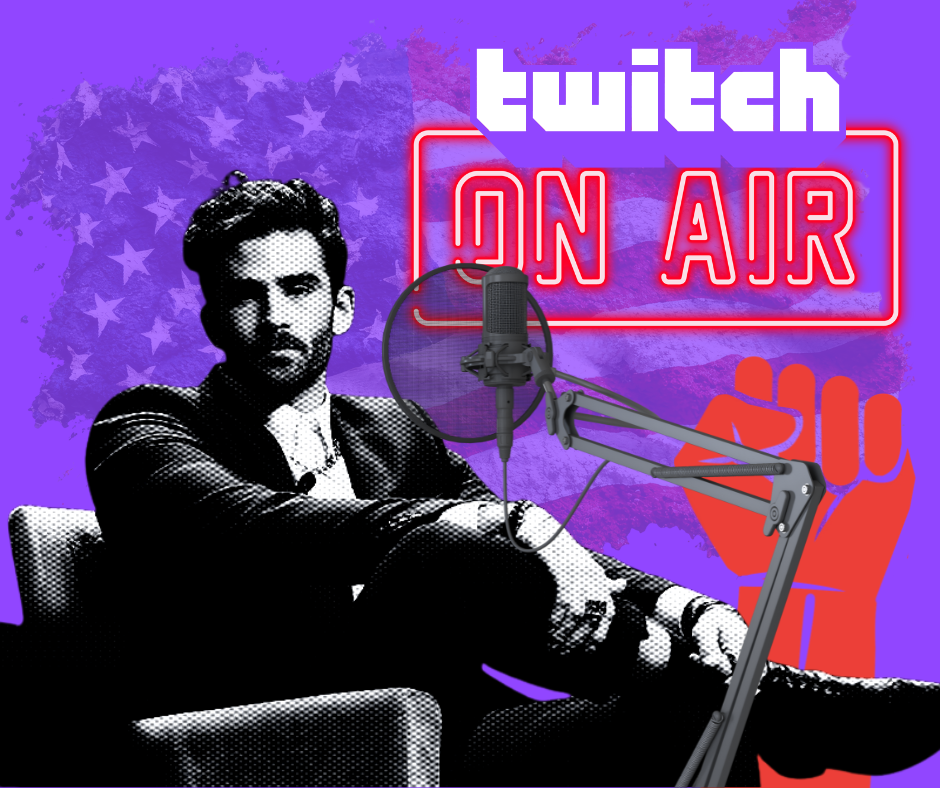
Feature Image: Hasan Piker/mbv1567/Flickr/License CC BY-SA 2.0/edited in Canva Pro


2 thoughts on “Hasan Piker and the “Burn It Down” Crowd”